
- Home
- XPCards · Single Page Apps
A kanban board,
before kanban was a word.
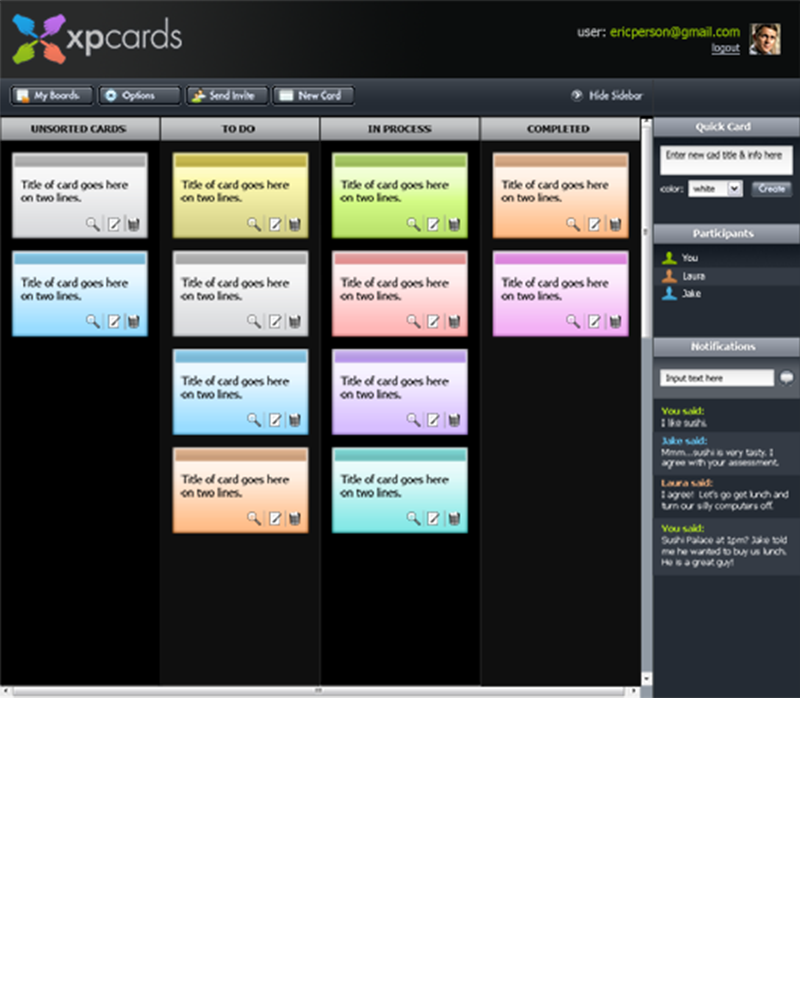
Pure JavaScript. No framework. No virtual DOM. None of those things existed yet. XPCards let small teams drag cards across a bulletin-board layout in the browser — roughly two decades before that became the default UI for project management.
A small piece of Beyond Ordinary’s heritage, from an era when “single page application” wasn’t a phrase anyone said out loud.
We’ve been writing JavaScript since browsers had IE6 buttons. We still are.
Cards. Columns. Drag-and-drop. No page reloads.
Before the kanban revolution, we built a small bulletin-board tool for organizing projects in the browser. Cards moved between columns with drag-and-drop, the page never reloaded, and the entire thing ran in vanilla JavaScript on browsers that didn’t even have querySelectorAll yet. It was a fun tool, a quietly ahead-of-its-time technical choice, and a hint of where the industry was about to go — even if the industry didn’t know it yet.
A bulletin board in the browser.
Cards held the work; columns held the state. You picked up a card and dropped it where it belonged — same gesture every modern project tool uses today, but happening in a single HTML page that never round-tripped to the server. That part felt like a magic trick at the time.
Why it stood out at the time.
- Pure JavaScript. No jQuery, no Prototype, no framework. The framework era hadn’t started.
- Single-page workflow. Drag, drop, edit, organize — the page never reloaded.
- Drag-and-drop in the browser. Built before HTML5 drag-and-drop standardized; we wrote our own.
- Worked on early-2000s browsers. IE6 was still a thing. So was the box model bug.
- Designed for small teams. Quick projects, quick iteration, very low ceremony.
- Never scaled to large engagements. Big consulting work outgrew it — an honest limitation, called out then and now.
Three takeaways that still shape the work.
SPA-style UX was always going to win once browsers caught up. Round-trips were a constraint of the era, not a property of the medium. As soon as JavaScript engines stopped being toys, the page-reload model was on borrowed time. We saw it from the inside — and we’ve been building around that conviction ever since.
Ahead-of-its-time builds need a market that’s ready. XPCards solved a real problem, but the audience for "live, browser-native project boards" was small in 2003. Trello showed up almost a decade later and the world was waiting. The lesson: timing isn’t a technical decision — and not every great build becomes a great product.
The team that ships in the browser has to know the browser. No framework was hiding the DOM from us in 2003. Two decades later, we still write the JavaScript when the JavaScript matters — and we know which abstractions to reach for, which ones to skip, and which ones will hurt later.
We still write JavaScript — we just have better tools now.
Beyond Ordinary has been shipping browser-heavy interfaces since XPCards. Today it’s Blazor, React, TypeScript, and the rest of the modern stack — but the discipline is the same: ship in the browser, own the DOM when you have to, and don’t pick frameworks that will hurt the next team.